









MPC Wallets that make web3 secure

SMS

Google Authenticator

Fingerprint


Transferable wallets
Share wallet ownership with its reputation and tokens
Two-factor authentication
Add 2FA as an additional requirement when signing transactions
Omni tokens that make web3 united

ETH

BASE

30 seconds bridge with cost of one token transfer
Deposit/withdraw omni tokens from any chain with no fees

Gas-free swaps
Trade omni tokens to buy assets from any chain to your omni balance with lowest gas fees
Empower smart contracts
to sign messages
 How does
 work?
work?HOT is a decentralized protocol — nobody has full control
Usual Chain Signature
- Controlled by one company
- Closed system
- Account is not transferable

HOT Chain Signature
- Decentralized
- Open SDK and API
- Transferable account
- Independent economy around HOT
You need $HOT to sign transactions on validators
The cost of signing depends on the key
threshold and network load
Validators
Validators store parts of the root private key and participate in the transaction signing
Stake
HOT to become part of the network
Earn
HOT for process signature requests
Play fair
to keep your stake from being cut
HOT For Developers
Leverage a production-ready technology stack for authentication and asset management. Reduce time-to-market (TTM) while providing a seamless user experience.
Explore documentationHOT Connect SDK

- Universal entry layer for all major blockchains
- Integration takes 2 lines of code
- <1 second signing. Users get speed and security.
- Create MPC wallet by Email
“Sign” API
for smart contracts
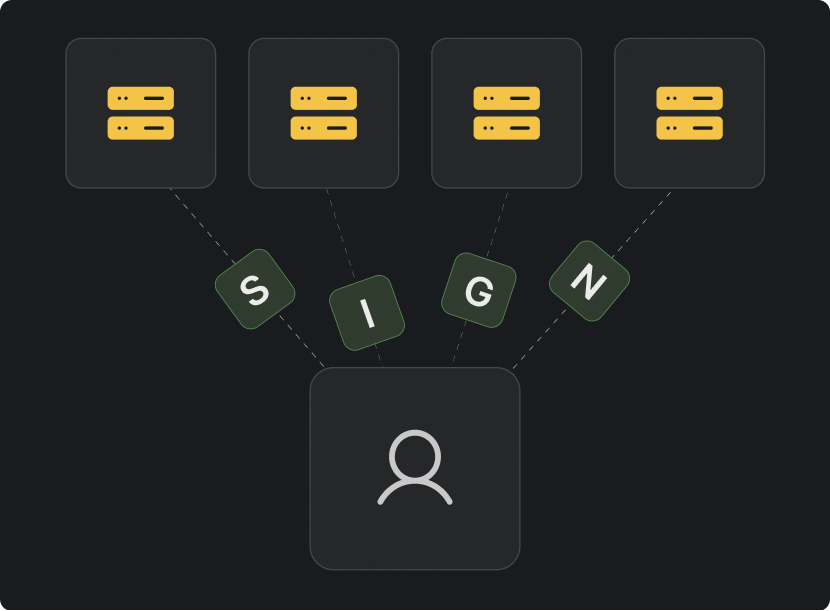
Empower your contracts through message signing. Create bridges, MPC wallets and off-chain proofs of your contract state.

















30M+
Total wallets
1B+
Total Transactions
50+
Onchain smart contracts
100+
Supported chains
Created to be secure

Audited by Trail of Bits
Independent nodes
All nodes are independent and hosted by trusted validators: EverStake, NEAR Protocol, Aurora, HAPI and other.





Privacy
- Validators do not know the full address of the wallet and full transaction they are signing.
- All messages between users and nodes are end-to-end encrypted.
- User restores his address and signature on the device.
TEE-backed signing: the key is enclave-bound, and signatures are verified on-chain.


